The S&P BSE Midcap and S&P BSE Smallcap indices gained 0.4% and 1%, respectively

Dr Reddy's was the top loser in the Sensex pack, shedding around 2 per cent, followed by Reliance Industries, Sun Pharma, HDFC twins, Infosys, M&M and PowerGrid. NSE Nifty slumped 137.65 points to 14,496.50.
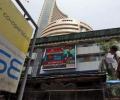
The market breadth, indicating the overall health of the market, turned negative from positive

The BSE Sensex slumped 456 points on Wednesday, tracking losses in index majors Reliance Industries, Infosys and ICICI Bank as market participants continued to book profits at high levels.

A little over 2,400 BSE-listed stocks ended with gains in April amid a sharp rebound in the broader markets from the March lows. This was the highest number of stocks that rose during a calendar month, as per data provided on BSE's website. The previous high was 2,322 gainers recorded in January.

Kotak Bank was the top gainer in the Sensex pack, rising around 3 per cent, followed by HDFC twins, ICICI Bank, Tech Mahindra, Bajaj Finance, Asian Paints and TCS. NSE Nifty surged 142.20 points to 15,098.40.

Fundraising through qualified institutional placement (QIP) has revived this year, led by commercial banks, after a lacklustre 2022. According to data compiled by Prime Database, Indian companies have raised Rs 53,070 crore in 2023 so far, of which seven banks - Union Bank of India, Indian Bank, Bank of India, Federal Bank, IDFC First Bank, Bank of Maharashtra, and J&K Bank - account for Rs 21,290 crore, or about 40 per cent. If other financial institutions are included, the figure surges to Rs 26,690 crore.

Large moves in equity and in currency are expected during March settlement.

Stocks of public sector undertakings (PSUs) have been on fire in the past year as investors cheered an improvement in key operating metrics and embraced counters of these state-owned enterprises, analysts suggest. The S&P BSE PSU Index has gained over 90 per cent in the past year, rising much higher than the S&P BSE Sensex, which has rose nearly 19 per cent during this period, according to ACE Equity data. The BSE PSU Index, reports show, has delivered a compound annual growth rate (CAGR) of 28 per cent (including dividends reinvestments) over five years and risen by almost 60 per cent in the past year.

ONGC was the top gainer in the Sensex pack, rallying around 6 per cent, followed by NTPC, Tata Steel, ICICI Bank, ITC, Titan and Bajaj Auto. On the other hand, Axis Bank, M&M, Tech Mahindra, Asian Paints and Bajaj Finserv were among the laggards.

From the Sensex pack, Larsen & Toubro jumped 4.26 per cent to emerge as the biggest gainer, followed by IndusInd Bank, Tech Mahindra, State Bank of India, HCL Technologies, Power Grid, NTPC, Axis Bank, Kotak Mahindra Bank, HDFC Bank and Wipro. Mahindra & Mahindra, Infosys, UltraTech Cement and Hindustan Unilever were the major laggards.

HUL was the top gainer in the Sensex pack, spurting around 3 per cent, followed by Infosys, M&M, ITC, SBI, IndusInd Bank, Bajaj Finance, Asian Paints, TCS and Bharti Airtel. On the other hand, Titan, PowerGrid and NTPC were among the laggards.

Mid- and small-cap indices have outperformed the frontline benchmarks - the S&P BSE Sensex (up around 10 per cent) and the Nifty50 (13 per cent) - in the first half of calendar year 2021 (H1-CY21) by rallying 26 per cent and 39 per cent, respectively. The trend, analysts believe, is likely to continue in H2-CY21 as well. The outperformance in H1-CY21 comes on the back of improved earnings and strong inflows from the foreign portfolio investors (FPIs) in Indian equities. However, good monsoon so far, gradual opening up of the economy and the pick-up in the pace of vaccination provides support to the market.

Stocks of public sector companies, especially the oil refining and marketing companies (OMCs) - Bharat Petroleum Corporation Limited (BPCL), Hindustan Petroleum Corporation Limited (HPCL) and Indian Oil Corporation Limited (IOC) - logged gains on Tuesday in a weak market. While the Nifty lost nearly 1 per cent in trade on Tuesday, the Nifty CPSE index - a gauge of performance of central public sector enterprises on the National Stock Exchange (NSE) - gained over 3 per cent in intra-day trade. The rally in PSU stocks comes on the back of the BPCL chairman, Arun Kumar Singh suggesting in the company's annual general meeting (AGM) on Monday that the government intends to complete the divestment process in the OMC by March 2022.

HDFC was the top gainer in the Sensex pack, spurting over 2 per cent, followed by Bajaj Finserv, M&M, NTPC, Bharti Airtel, UltraTech Cement and ONGC. NSE Nifty rose 98.35 points to 14,823.15.

Bharti Airtel was the top gainer in the Sensex pack, rising around 4 per cent, followed by Tech Mahindra, HDFC, Kotak Bank, M&M and HCL Tech. NSE Nifty advanced 21.85 points to 16,280.10.

The NSE Nifty settled the day 93.20 points or 0.88 per cent lower at 10,452.30 after shuttling between 10,612.90 and 10,434.05.

The gap between the highs and the lows in April for the benchmark S&P BSE Sensex was just 4.1 per cent - the narrowest since July 2021 and nearly half its three-year average. The absence of major positive triggers, sectoral rotation, and cautiousness due to earnings and economic uncertainty have kept a tight leash on the markets, observe experts. Remarkably enough, during the 17 trading sessions in April, the Sensex didn't even log an advance or a decline of more than 1 per cent.

On BSE, 1,826 shares declined and 982 shares rose, while a total of 194 shares were unchanged

Indices across Indian equity markets have edged towards new record highs before undergoing a small correction in the past few sessions. The National Stock Exchange Nifty has gained 20 per cent in the past year; mid-caps (up 33 per cent), small-caps (up 31 per cent), and micro-caps (up 44 per cent) have done better. Several factors have precipitated this rally.

The market rally was driven by strong buying in telecom, banking, realty, metal, FMCG and PSU counters.

Since March 31, 2022, the PSBs' market cap has risen 43.7 per cent, from Rs. 7.29 trillion to Rs. 10.47 trillion. It's time for the government, the majority owner of public sector banks, to reap the benefit of the rally in bank stocks, recommends Tamal Bandyopadhyay.

Benchmark equity indices Sensex and Nifty slumped over 1 per cent on Friday, tracking a weak trend in global markets and fresh foreign fund outflows. Falling for the third day running, the 30-share BSE Sensex tumbled 1,017.23 points or 1.24 per cent to settle at 81,183.93.

Telecom, metal and healthcare came as dampeners.

Sectoral performance was mixed with media and PSU banking stocks attracting buyer interest and healthcare, FMCG and metal stocks bearing the brunt of the bears

The other prominent gainers were Tech Mahindra, HCL Technologies, Wipro, State Bank of India and Larsen & Toubro. Bajaj Finserv, Power Grid, UltraTech Cement and HDFC Bank were among the laggards.

Top gainers in the Sensex pack included Tata Steel, Kotak Bank, NTPC, HDFC twins, PowerGrid and ONGC, rising up to 4.60 per cent.

'If the NDA comes to power with 320-330 plus seats, then we could see some correction. We could possibly see a level of 19,500 to 20,000.' 'If the NDA comes to power with a majority of 400-plus, we could see the markets going to about 23,500-24,000 levels.' 'And from there we could see some correction because markets are expensive at this point of time and a correction is overdue.'

As the Indian stock markets tumble under the panic set off by US President Donald Trump's tariff tantrums, three market experts weigh in on the reasons behind this fall, how much pain is left and how should investors adapt their strategies to invest in markets.

Tata Steel was the top loser in the Sensex pack, plunging over 8 per cent, followed by SBI, Dr Reddy's, Kotak Bank, Sun Pharma, Bajaj Auto and L&T. NSE Nifty declined 118.35 points or 0.71 per cent to 16,450.50.

The performance has been a clear contrast to the movement in the first two months of 2014, when the S&P BSE PSU index massively underperformed the S&P BSE Sensex (down 0.2 per cent) by slipping nearly seven per cent.

Among Sensex components, shares of Reliance Industries, India's largest company by market value, stole the show by surging 1.61 per cent to their highest in over three months.
NTPC was the top gainer in the Sensex pack, rising around 4 per cent, followed by Bajaj Finserv, SBI, Bajaj Finance, Tech Mahindra, Dr Reddy's and Tata Steel.

In an eventful week ahead, stock market investors will take cues from major events like the US Federal Reserve's interest rate decision, the upcoming Union Budget and Q3 earnings, analysts said.

Price correction over post-election peaks could throw disinvestment calculations awry.

YES Bank, Bank of Baroda, SBI, IndusInd Bank, and RBL Bank are amongst the banks, Jefferies says, are most prune to "high risk" emanating from ADAG, Cox & Kings, CG Power, DHFL and Essar Shipping.

Despite the large economic impact of the Covid-19 pandemic, the markets have recovered sharply even though the performance among individual stocks has been quite polarised.
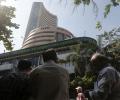
Asian shares ended higher following a relief rally in global equities after centrist candidate Emmanuel Macron won the first round of the French presidential election.

Government-owned companies are more generous in rewarding their shareholders with dividends.

The S&P BSE Sensex dropped 1 points to end at 26,396 and the Nifty50 slipped 2 points to end at 8,109.
